
Donate
Your gift pays for the work on the ground: thinning crowded stands so large trees can grow again, repairing salmon streams, and taking out the old logging roads that send sediment into the creeks.
Donate


Redwood Forest Foundation
For more than a century, the redwood forests of California’s Lost Coast were logged and hauled away. We take on depleted forest land, rebuild it, and manage it as healthy working forest, for the good of our planet and its people.
Who we are
Our mission
We acquire devastated redwood forest land, rebuild it, and manage it as healthy working forest.
Our vision
We want to bring our model to as much devastated forest land in the redwood region as we can, rebuilding redwood forest that adds healthy forest back to the planet and holds as much carbon as it possibly can.

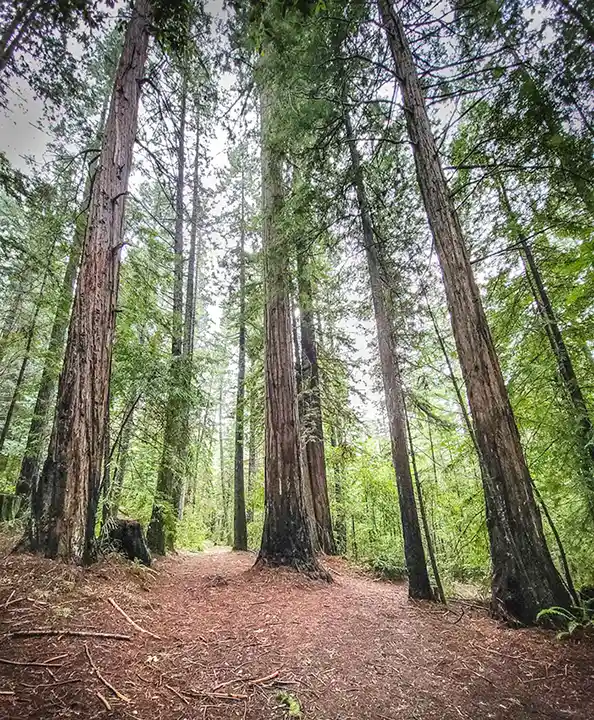
Only about five percent of the old-growth redwood forest is still standing, and most of the rest was logged, much of it more than once. Redwood Forest Foundation takes on that land and rebuilds it. We thin crowded young stands, repair streams, remove old logging roads and bring good fire back, and then we manage the land as a working forest that supports the people around it.
We call it a working forest because a forest that is being rebuilt has to be worked on. Buying the land does not repair it, and leaving it alone after a century of logging lets crowded young stands and eroding roads decide what comes next.
More about usWhen Louisiana-Pacific put its California timberland up for sale, people in Mendocino County who had spent years on opposite sides of the timber wars came together to start Redwood Forest Foundation.
We bought the Usal Redwood Forest on California’s Lost Coast: 50,000 acres, about 1.7 times the land area of San Francisco.
A conservation easement made sure the forest would stay whole and in forest for good.
The forest was certified by the Forest Stewardship Council, the international standard for responsibly managed forest, and it still is.


 Fully booked
Special event · by invitation
November 9 to 11, 2026
Spend three days on California’s Lost Coast with the people bringing a redwood forest back. You’ll head deep into the Usal Redwood Forest, walk ground where the wildfire work is happening, watch a four-legged robot pick its way across the forest floor, and plant a redwood that could still be standing in 2,000 years.
Made possible with SCP Mendocino Coast Lodge, Hill House at Trailborn, The Jonsteen Company, PlantWave, Boston Dynamics, MendoSauna and Lombardi’s Gourmet BBQ.
How we work
The Usal Model is the way we rebuild and manage forest land. We developed it on the Usal Redwood Forest with our own forestry team and the biologists and technicians who work there year-round. Every forest is different, so what we do and when depends on the ground in front of us, but the principles stay the same from one forest to the next. Six principles guide all of it.
Principle 1
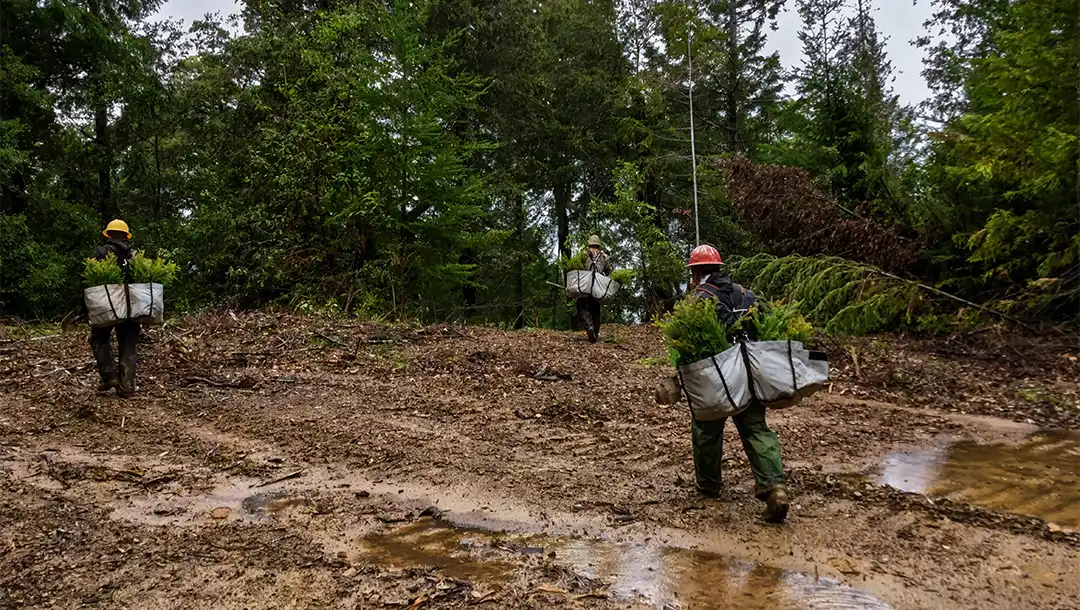
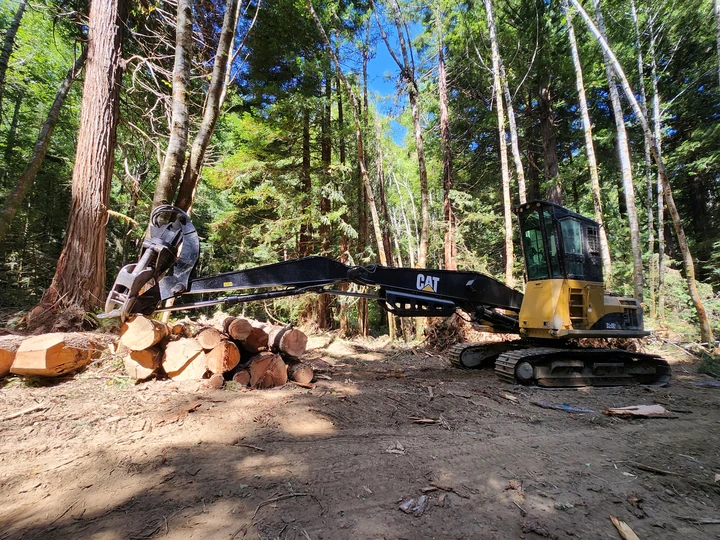
After logging, the land filled with crowded young trees, brush and tanoak, which keep the conifers from growing large again. We thin those stands, which sometimes includes selective harvest, and we rebalance the tanoak rather than remove it, because it is a native tree and its acorns matter to the people who have gathered them for generations. Where natural regrowth is not enough, we plant.
Done
About 1,200 acres of crowded stands thinned and improved since 2020, roughly 200 acres every year.
Principle 2
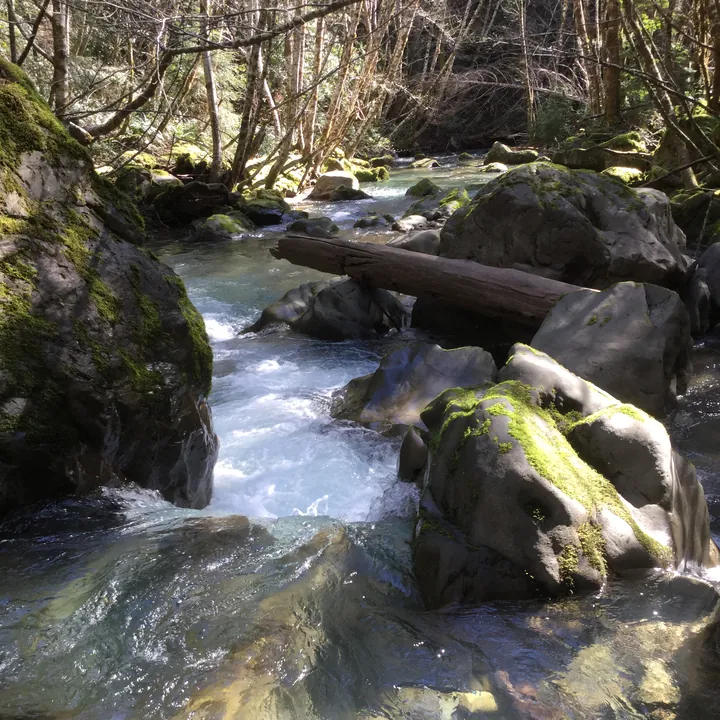
Logging roads and failing crossings sent sediment into the creeks and stripped them of the logs and pools that salmon need. We repair crossings and put large wood back in the streams so they can hold gravel and fish again.
Done
In 2024, adult coho salmon were seen in Usal Creek again after about ten years without them. Coho are a native salmon that come back from the ocean to spawn in coastal creeks, and they need clean gravel and cool pools to do it.
Principle 3
Old logging roads were often cut along creeks and across steep slopes, and they are still the biggest source of erosion in a forest like ours. We remove the roads we no longer need, repair the ones we keep, and stop the soil from washing into the creeks.
Done
About 101,000 cubic yards of sediment kept out of Standley Creek, enough to fill about 30 Olympic swimming pools.
Each block is one Olympic swimming pool.
Principle 4
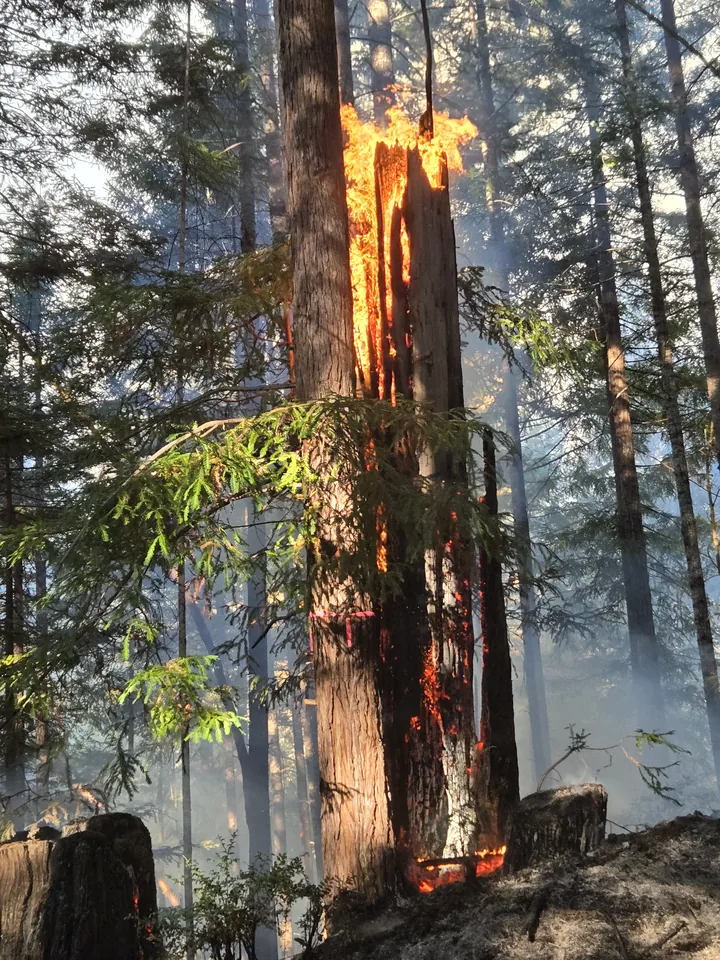
Fire belongs in this forest, and the people who lived here used it with care for a very long time. We run prescribed burns to reduce dangerous fuels, and we support cultural burning guided by Indigenous knowledge and led with tribal partners.
Done
Our first prescribed burn was in 2023, and 63 acres at Parker Flat, about the size of 48 football fields, are set aside for cultural stewardship.
Principle 5
Invasive plants such as broom move into logged ground quickly and crowd out what should grow there. We remove them and keep watching the places they tend to come back.
Done
French broom pulled out along Usal Creek in 2023, and volunteers trained to map invasive plants so we know where they are coming back.
Principle 6
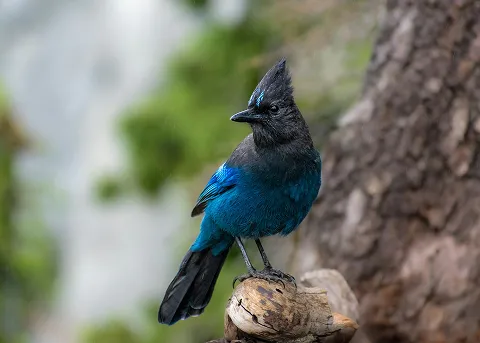
Biodiversity is the clearest measure of a forest’s health, so we count the wildlife and track how the forest grows, using our own biologists along with cameras, sound recorders and DNA sampling, so that we can show what is working rather than simply claim it.
Done
We do it with Smart Forest, our own monitoring technology: wildlife cameras, weather stations and sound recorders that report from the trees. A pilot is running now, and we are looking for donors to take it across the forest. Sponsoring a grove in 1000 Groves pays for it.
For the planet
Growing forest takes carbon out of the air and stores it in wood, and redwoods are very good at it. Research at Cal Poly Humboldt has found that old-growth coast redwood forests store more carbon per acre than any other kind of forest studied, and that younger redwood forests take it up quickly as they grow.
The old-growth groves are wonderful, but young forest that is growing back makes a real difference too, and there is far more of it. Every acre we rebuild is an acre working for the climate again.






Help rebuild the redwoods
Every way of giving pays for the same work: rebuilding redwood forest that was devastated by logging and managing it as healthy working forest.
Your gift pays for the work on the ground: thinning crowded stands so large trees can grow again, repairing salmon streams, and taking out the old logging roads that send sediment into the creeks.
DonateWe’ll plant a redwood in the Usal Redwood Forest in the name of someone you care about, and send you a certificate to give them.
Plant a redwoodWhen you sponsor an acre, you pay for rebuilding work on a piece of the forest that you can find on the map.
Sponsor an acreSome of our supporters remember the forest in their will, and some own forest land themselves. If you own land in the redwood region that has been logged hard, we can talk with you about buying it, managing it on your behalf, or receiving it as a gift.
Legacy givingFor companies, schools and organizations
Sponsor a 50-acre grove of the Usal Redwood Forest
The Usal Redwood Forest is divided into about a thousand groves of 50 acres each. When you sponsor one, you follow a year of forest work on that ground through cameras, a weather station and a sound recorder in the trees, and you are welcome to come and see it for yourselves. A company gets a grove the whole team can follow and visit, and a school can adopt a grove for the school year and raise toward it together.
Open the sample grove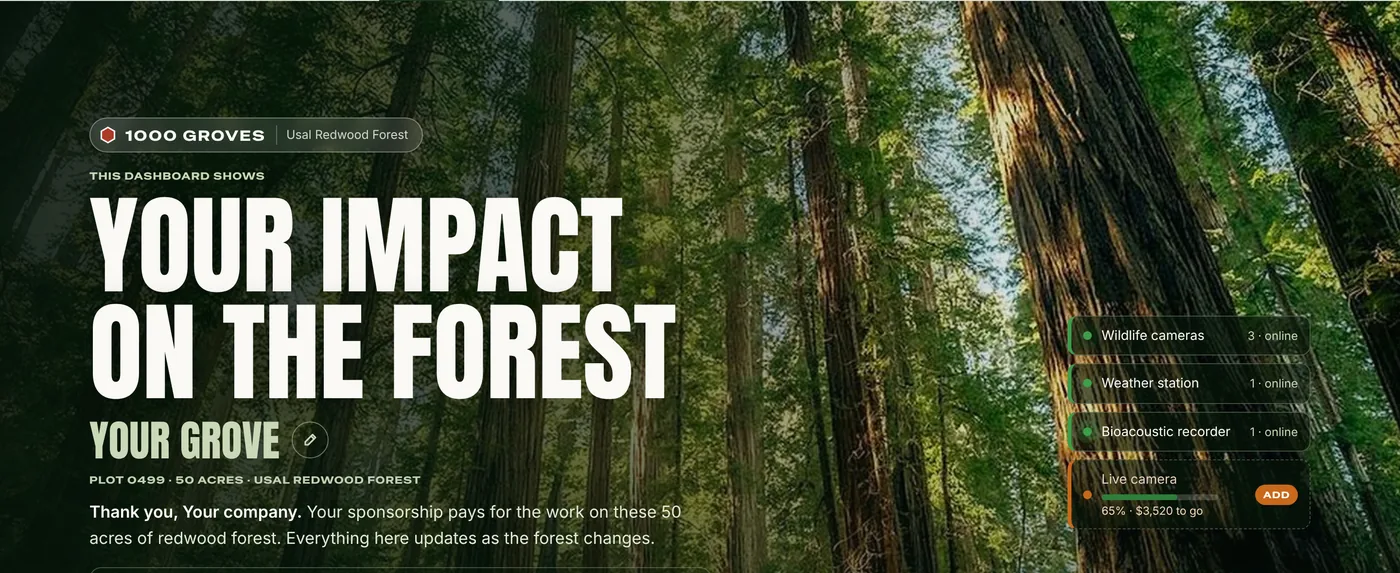
The sponsor dashboard RFF built, shown with sample numbers. Click a tab to see each page.
Forest Tour
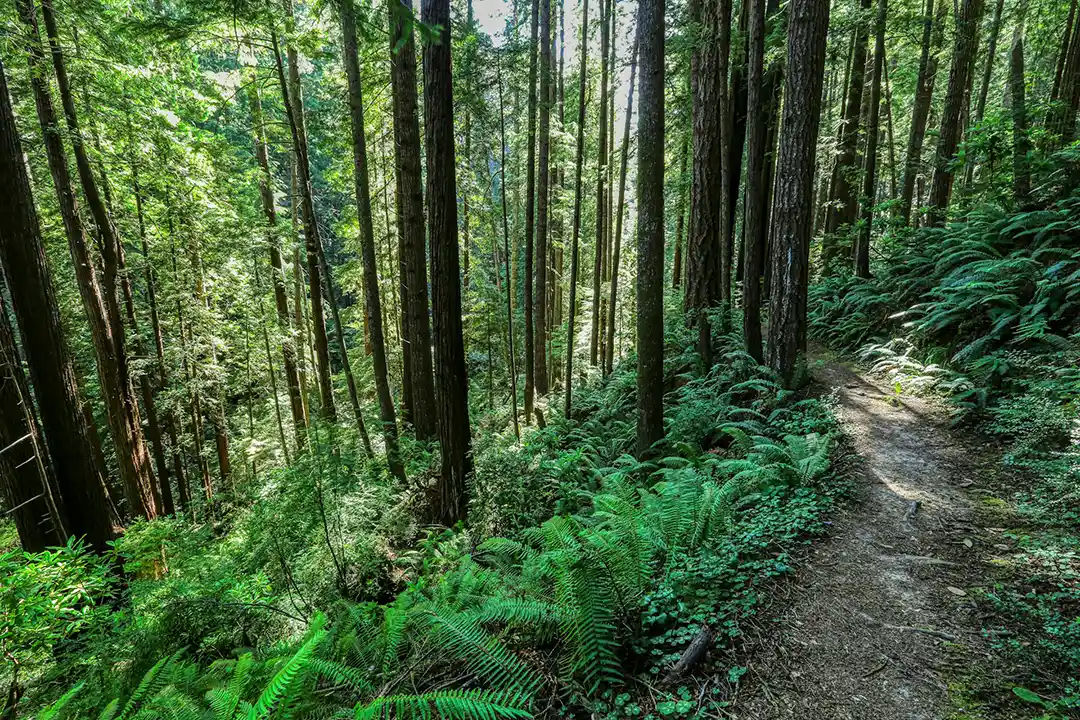
Explore four forest communities on a three-hour ecology and restoration tour covering 20–25 miles, with your guide driving the UTV and optional hiking along the way. Led by the people who manage the land year-round.
Book the tour


Forest Tour · Google reviews
45 photos from 5 guests' Google reviews
Stories from the forest
 October 26, 2026Common Ground: Collaboration and Opportunity at RFF’s 2026 Annual Meeting
 October 10, 2026Understanding California Redwood Conservation
 August 25, 2026A Corporate Retreat Program in the Redwood Forest
 August 23, 2026Where to See Coho Salmon in Redwood Forests
 August 23, 2026Best Time of Year to Visit the Redwoods in California
 August 21, 2026The Redwood Tree That Builds an Entire Ecosystem


